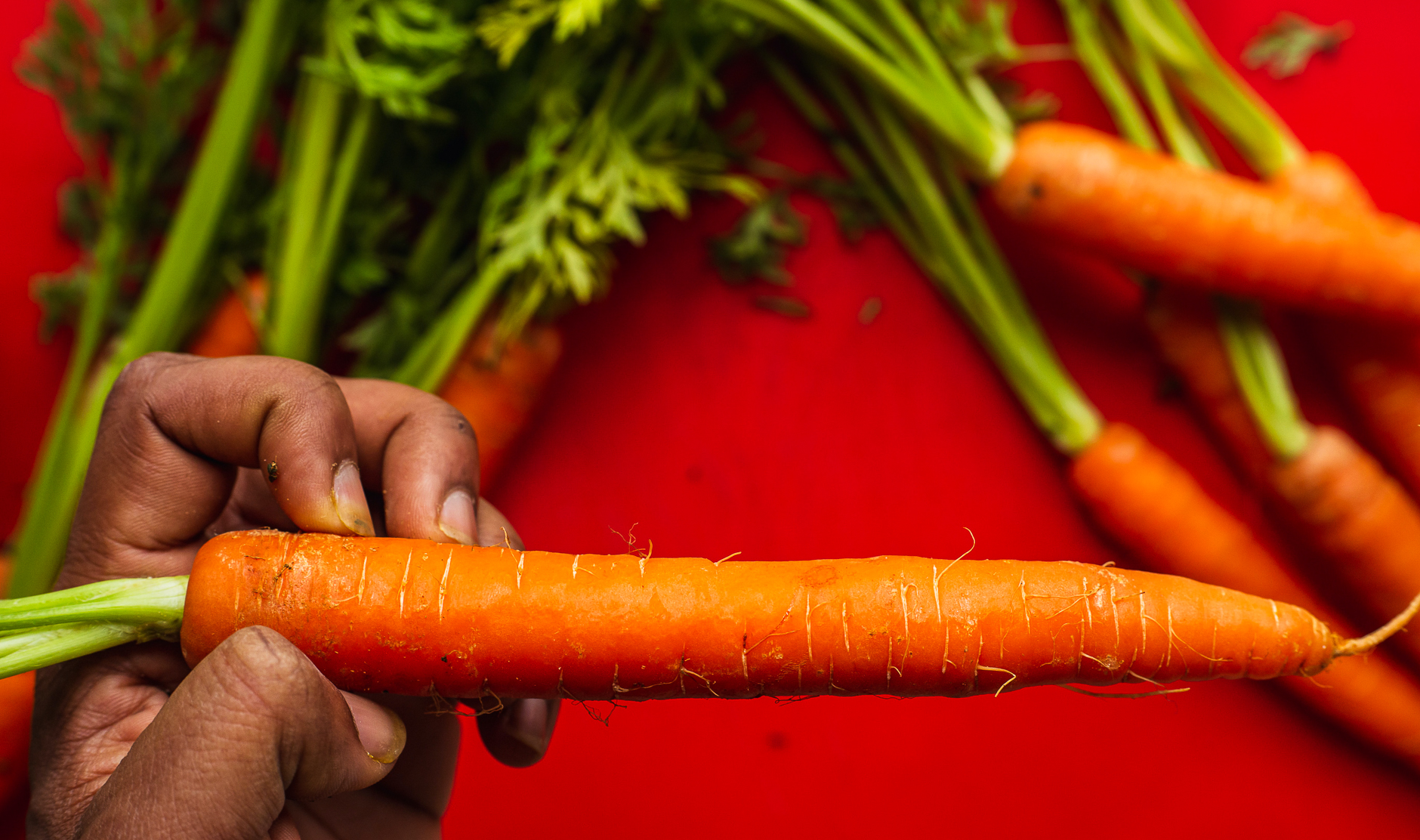

Carrot: benefits and tips
What are carrots good for? Discover the benefits of this colorful root vegetable
W hat are
carrots good for?
Carrot is a root vegetable that stands out due to its high content of carotenes, what causes its characteristic orange colour. Among all types of carotenes, carrots are rich on alpha and beta-carotene, compounds that our body transforms into vitamin A. Carotenoids are substances with powerful antioxidant activity and have been linked to improved immune functions and lower risks of many diseases.
 Carrots are rich in alfa and beta carotene
Diets rich in carotenoids may help protect
against several types of cancer such as breast, prostate, colon and stomach cancer. They
are also thought to protect against heart diseases and to improve eye health.
Carrots rank low on the Glycemic Index scale. Eating low-glycemic foods is linked to numerous health benefits, and it is considered especially beneficial for diabetes. Moreover, carrots are a source of vitamin B6 and of minerals such as potassium, present in high amounts, and in more discrete quantities, phosphorous and magnesium.
 Carrots contain high quantities of potassium
Some tips and things to keep in mind when buying, preparing and eating carrots:
- Roots are important. Thin root hairs are a sign of age. If they have their tops, the leaves should look well, green and vibrant, not flimsy or brown.
- If carrots are stored in a bag, avoid those that seem overly wet or dry.
- When a carrot is split or cracked, it is not a lost cause, in fact, it could be a good sign. Some carrot varieties are tender and juicier, and as a result, more prone to cracking as they grow.
- Store the carrots in a breathable bag in the fridge crisper drawer. They will keep crisp and sweet for weeks.
- When they emit a lot of moisture, change the bag or place a paper towel in the bag to absorb the excessive water.
- Avoid storing them with apples or other ethylene-producing fruits, they will turn the carrots bitter.
- When carrots are cooked, they release the carotenoids, being more available to the body.
- Not all carrots are orange! Carrots of different colours have interesting health promoting compounds: Lutein in yellow carrots, lycopene in red carrots, anthocyanins in the root of purple carrots and phenolic compounds in black carrots.
 Not all carrots are orange! Carrots from different colors have different compounds and associated benefits
References
- Ahmad, T., Cawood, M., Iqbal, Q., Ariño, A., Batool, A., Tariq, R. M. S., ... Akhtar, S. (2019). Phytochemicals in Daucus carota and Their Health Benefits. Foods, 8(9), 424.
- Sharma, K. D., Karki, S., Thakur, N. S., Attri, S. (2012). Chemical composition, functional properties and processing of carrot—a review. Journal of food science and technology, 49(1), 22-32.
- Xu, H., Jiang, H., Yang, W., Song, F., Yan, S., Wang, C., ... Lu, Z. (2019). Is carrot consumption associated with a decreased risk of lung cancer A meta-analysis of observational studies. British Journal of Nutrition, 122(5), 488-498.
- Slattery, M. L., Benson, J., Curtin, K., Ma, K. N., Schaeffer, D., Potter, J. D. (2000). Carotenoids and colon cancer. The American journal of clinical nutrition, 71(2), 575-582.
- Larsson, S. C., Bergkvist, L., Näslund, I., Rutegård, J., Wolk, A. (2007). Vitamin A, retinol, and carotenoids and the risk of gastric cancer: a prospective cohort study. The American journal of clinical nutrition, 85(2), 497-503.
- Rizkalla, S. W., Bellisle, F., Slama, G. (2002). Health benefits of low glycaemic index foods, such as pulses, in diabetic patients and healthy individuals. British Journal of Nutrition, 88(S3), 255-262.

![¿Qué combinaciones de alimentos incrementan la absorción de nutrientes? [con ejemplos]](https://aifoodtech.aitalentum.com/uploads/cms/62ac2302693fba0b2cd2071819aea984.JPG)