
Spinach: benefits and tips
What is spinach good for? Discover the benefits of this superfood
What is spinach good for?
Spinach is a leafy cool-season vegetable, often referred to as a superfood. Due to the functional properties of the nutrients and non-essential chemical compounds that it contains, spinach has many benefits, making it a health-promoting aliment.
Spinach has a diverse nutritional composition with high amounts of vitamin A, C, and E, all of them antioxidants. Moreover, it is a good source of folate and vitamins B1, B2, B3, and B6. Regarding minerals, spinach is rich in calcium, iron, magnesium, potassium, copper, and iodine. It is also high in insoluble fiber, benefitting digestion.

Spinach is rich in insoluble fiber, benefitting the digestion process
Among the bioactive compounds, spinach has high contents of lutein and zeaxanthin. These compounds are especially important for healthy eyesight, helping to prevent macular degeneration and cataracts. Epidemiological studies have also shown that spinach may delay or retard age-related loss of brain function, reduce the extent of post-ischaemic stroke damage to the brain and protect against cancer through different mechanisms.
Overall, this makes spinach a very complete vegetable.

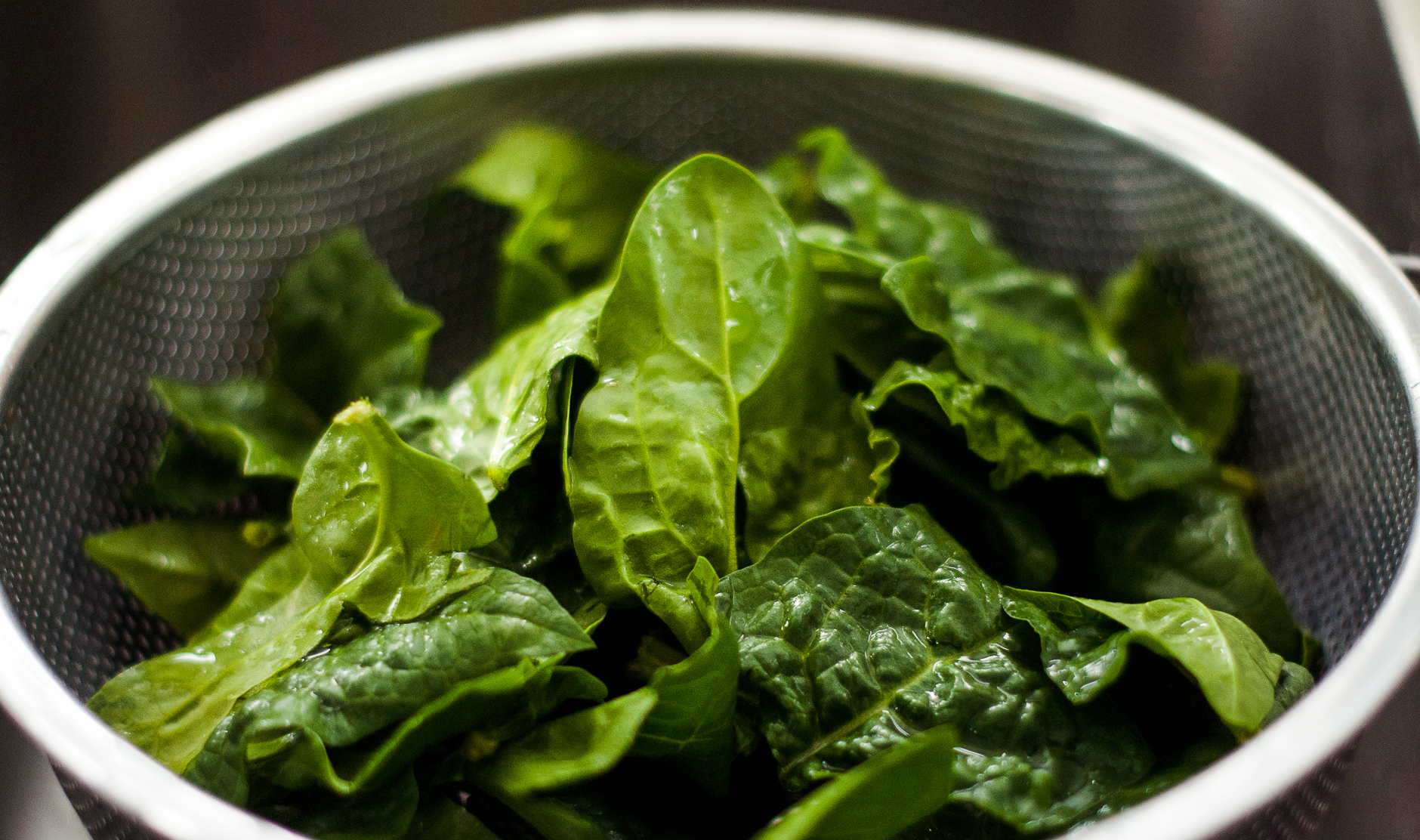
Fresh spinach should look medium to dark green and without any evidence of decay
Some tips to buy, prepare, and eat spinach:
- Identify fresh spinach by its colour. It should be medium to dark green, fresh-looking and without any evidence of decay.
- It must be packed in a sealed plastic bag in the fridge. Consume it before 4 days.
- Do not wash or rinse the spinach before storing it. The moisture resulting will cause it to spoil.
- The top 3 options to preserve the nutrients of this food are: steaming, sautéing or microwaving.
References
- Maeda, N., Yoshida, H., Mizushina, Y. (2010). Spinach and health: anticancer effect. In Bioactive foods in promoting health (pp. 393-405). Academic Press.
- Tang, G. (2010). Spinach and carrots: vitamin A and health. In Bioactive foods in promoting health (pp. 381-392). Academic Press.
- Roberts, R. L., Green, J., Lewis, B. (2009). Lutein and zeaxanthin in eye and skin health. Clinics in Dermatology, 27(2), 195-201.

![¿Qué combinaciones de alimentos incrementan la absorción de nutrientes? [con ejemplos]](https://aifoodtech.aitalentum.com/uploads/cms/62ac2302693fba0b2cd2071819aea984.JPG)